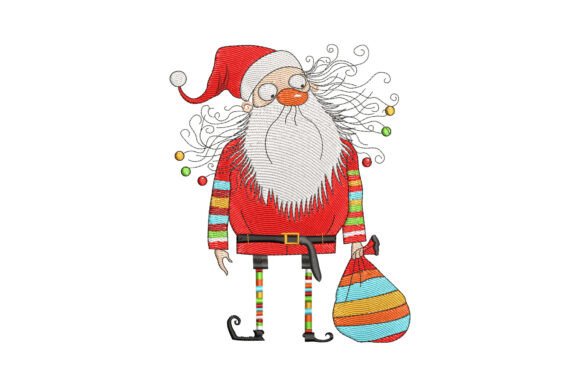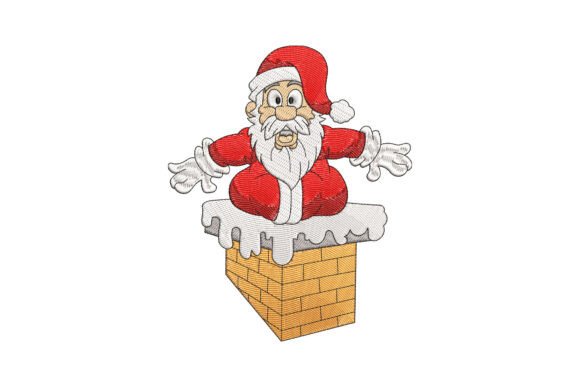
Why Quirky Santa Christmas is a Craft Fair Standout
As an embroidery designer preparing for a weekend market, every design I choose is a calculated bet. It needs to attract a glance, hold a gaze, and convince someone to pull cash from their wallet within a crowded, lively environment. When reviewing the Quirky Santa Christmas machine embroidery design for my booth, my evaluation isn't just about aesthetics—it’s about practicality, production speed, and that elusive “must-have” factor.
A First Impression Built for Selling
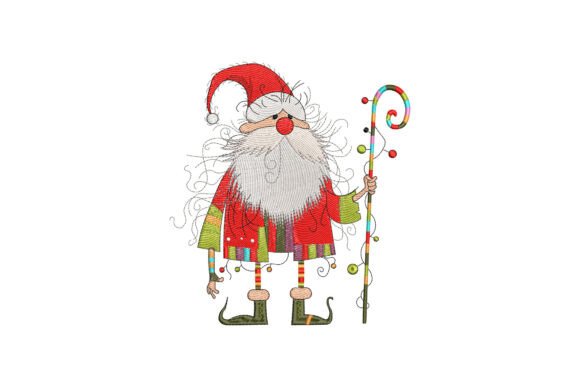
The title tells you everything: Quirky Santa Christmas. This isn't a formal, traditional Santa. It’s playful, full of personality, and leans decisively into the cute, festive, and decorative mood. That’s a powerful niche. In a sea of elegant snowflakes and minimalist holiday motifs, a quirky character acts as a visual magnet. It promises a smile, a bit of humor, and feels inherently handmade. This emotional hook is exactly what craft fair customers seek; they’re buying a story and a feeling, not just a product.
Product Placement: Where This Design Shines
My booth table is a curated landscape: tote bags, aprons, tea towels, caps, small pouches, pillow covers, and ready-to-gift items. I mentally walk through where Quirky Santa Christmas would earn its spot.
The High-Impact Champions
For maximum visibility, I’d prioritize tote bags and market bags. A larger, quirky character centered on a bag becomes an instant statement piece. It’s wearable art that customers can envision using immediately. Similarly, a pillow cover with this design transforms a living space with a touch of festive whimsy, elevating it from a simple craft to a desirable home décor item. These are focal-point products where the design’s personality can fully express itself.
The Quick-Turn Favorites
Tea towels and aprons are perennial craft fair hits. Quirky Santa Christmas embroidered on a crisp kitchen towel adds a burst of holiday cheer to a utilitarian object, increasing its perceived value. On an apron, it becomes a conversation starter at holiday gatherings. Both are relatively quick to produce, ideal for batch work, and have a lower price point that encourages impulse buys.
The Versatile Accents
This design also has strong potential as an embroidered patch. Patches are versatile, affordable, and appeal to a broad audience. A quirky Santa patch could be applied to jackets, jeans, or backpacks. Smaller applications like fabric pouches or caps work well if the design retains clarity when scaled down—a critical point I’ll test. These items fill out a display, offering options at every budget level.
The Practical Production Checklist
A beautiful design that’s difficult to stitch is a liability at a busy fair. The description notes easy to stitch, which is a major advantage for batch production. But "easy" is relative. My designer checklist before committing to bulk production is stringent.
- Test on Scrap Fabric First: I’ll stitch Quirky Santa Christmas on various materials: smooth cotton for totes, textured linen for towels, and possibly a curved surface like a cap. This reveals how it handles different fabric textures.
- Check Stitch Density and Thread Contrast: Dense stitch areas on thick fabrics like bag canvas can require careful stabilizer choice. I’ll note if small details, like facial features, use a sufficient number of stitches to remain crisp, especially on darker fabrics where thread contrast is vital.
- Confirm the Optimal Hoop Size: The description doesn’t specify a hoop size. I need to verify this from the embroidery file itself. Does it work as a small accent in a 4x4 hoop, or does it demand a 5x7 or larger to maintain its charm? This dictates which products are feasible.
- Create a Real Physical Mockup: A photographed real product, not just a digital mockup, is essential. How does the embroidered Quirky Santa Christmas look in person? Does the thread pop? Does it feel premium? This mockup becomes my best Etsy listing photo and my booth sample.
- Review for Batch Production Repeatability: A good craft fair design should be consistent across multiple items. I’ll assess if the design has any extremely time-consuming elements or color changes that would slow down producing twenty identical tote bags.
Selling Power and Booth Dynamics
At the fair itself, this design’s success hinges on three things: visual appeal, perceived value, and engagement.
Visual Appeal: Its quirky nature should make it stand out even in a packed booth. On a tote bag hanging from my display, it will catch eyes from a distance. The personality suggests a specific buyer: someone looking for fun, non-traditional holiday cheer.
Perceived Value: Handmade quality is conveyed through clean stitching and thoughtful placement. On a well-made product, Quirky Santa Christmas elevates a simple item into a unique gift. Customers often justify a higher price for something that feels special and personal.
Buyer Engagement: A fun design sparks conversation. It’s easier for me to talk about—“This quirky Santa just makes me smile!”—and easier for a customer to imagine giving or using. That emotional connection directly drives sales.
Critical Use Notes for a Smooth Process
Based on experience, I’ll be cautious of a few technical points. If the design includes very tiny details or small lettering, it might lose clarity on textured fabrics like towels or when minimized for a cap. I’ll test this rigorously. For dark fabrics, I’ll ensure my thread colors are bright enough for high contrast. Finally, I must confirm the commercial licensing of the digital embroidery file. As a small shop product, I need the legal right to sell the finished items at my booth or on Etsy. That’s a non-negotiable first step before any production begins.
Final Judgment: A Market-Ready Design
Quirky Santa Christmas presents a compelling case. Its personality-targeted aesthetic fits a popular holiday niche, and its described ease of stitching suggests production efficiency. Its natural applications—tote bags, towels, pillows—are craft fair staples with proven sales trajectories. By methodically testing its performance on different fabrics, optimizing thread choices, and ensuring licensing compliance, I can confidently transform this machine embroidery design into a lineup of attractive, sellable handmade products. It has the character to draw customers in and the practical potential to keep my production humming as I stock my booth for the holiday market rush.