A Designer’s Honest Review of the Dad Embroidery Design
Let’s talk about the Dad embroidery file. This isn’t just a design I pulled up on screen; it’s one I’ve actually stitched out and considered for a few real client projects and personal gifts. My perspective is from the worktable: how does it perform when the needle hits the fabric, and what kind of finished product does it create?
First Impression: Elegant, Simple, and Unmistakably Warm
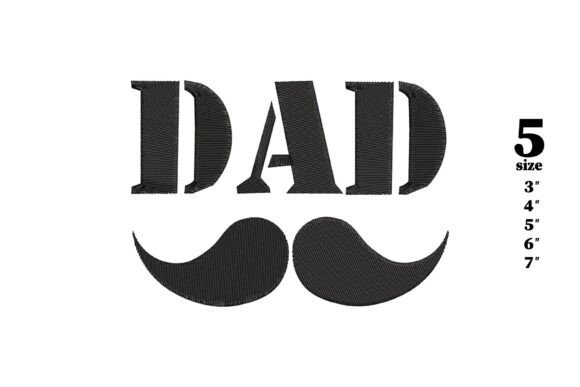
The moment I opened the file, the design felt immediately clear and friendly. It’s not overly ornate or filled with tiny, fussy details. The layout is straightforward, the lettering is bold and legible, and the overall shape is balanced. This creates a mood that is celebratory and warm without being loud or cartoonish. It has a visual personality that leans towards classic and heartfelt, which I think is its biggest strength. It doesn’t scream; it just states “Dad” with a quiet confidence that feels genuinely elegant.
For me, this points directly towards projects where the sentiment is the focus. It naturally belongs on items meant as a personalized gift or as small shop merchandise with a handmade, thoughtful touch. I pictured it on a crisp cotton apron, a soft fleece blanket, or the corner of a linen pillow cover. It doesn’t feel like a generic logo; it feels like a tribute.
Putting Dad to Work: Real Project Scenarios
I tested this on a mid-weight cotton tote bag first—a staple for many craft businesses and Etsy sellers. The result was exactly as hoped: clean, eye-catching, and professional. The stitch density felt appropriate, with solid fill stitches in the main elements and clean outlines. It translated well into a tangible, high-value handmade product. On a sweatshirt, using the right stabilizer for the knit fabric, it held its shape beautifully without puckering, making it ideal for custom apparel.
For baby embroidery, like on a onesie or a baby blanket, the design’s simplicity is key. It’s not too dense, so it remains soft and comfortable against delicate skin, and its clear lettering makes it a sweet, recognizable keepsake. I also considered it for an embroidered patch, which could be applied to a cap or a backpack. The bold forms would make it a great standalone patch, easy to trim and apply.
The Sweet Spot: Holiday Gifts and Everyday Keepsakes
Given its category, Father’s Day embroidery is an obvious home. But its usefulness extends far beyond a single holiday. This design is versatile enough for wedding gifts for a new father, anniversary presents, or just everyday boutique products celebrating family. For a creative entrepreneur, it’s a reliable design asset that can be used in multiple listings—think a mockup on a tea towel, a cap, and a hoodie—to show variety without redesigning.
The real-life scenario I kept imagining was a customer in a small shop, looking at a simple, well-made kitchen towel with Dad embroidered neatly in the corner. It feels personal, special, and worth the price. That’s the kind of buyer engagement and perceived value this design can support when executed well.
Where to Exercise a Bit of Caution
No design is universally perfect, and a practical review means noting where attention is needed. For Dad, the main considerations revolve around scale and fabric.
While it’s likely adaptable, on very small hoop sizes, some of the lettering details might become tight. Always test on scrap fabric first if you’re planning a mini version on a baby garment collar or a tiny patch. On textured fabrics like some sweater knits or heavily textured linens, the clean lines might soften a bit, so thread color contrast becomes extra important. Stitching it on dark fabric will require careful thread choice to maintain that elegant, eye-catching quality.
For curved surfaces like caps, the design’s balanced layout should work, but you must use proper stabilizer and possibly consider a slightly reduced density to accommodate the curve. Also, for products destined for frequent washing—like aprons or kitchen towels—ensure your stitch quality is robust to maintain that handmade presentation over time.
Affecting Your Craft Business and Customer Trust
Using a design like this isn’ just about the stitch; it’s about the final product’s story. When a design stitches out cleanly and looks intentional, it boosts the overall professionalism of your work. For an Etsy seller or apparel decorator, that consistency builds customer trust. A gift recipient receiving a tote bag with this embroidery sees a finished product that looks cared-for and specific, not slapped-on. That enhances giftability and brand consistency for a maker.
It’s also a design that lends itself well to digital product previews and printable mockups for digital embroidery file sellers, because its clear forms are easily recognizable even in a flat image.
Practical Notes From the Worktable
My advice before you run this file for a commercial embroidery project or a craft fair product:
- Stitch it out on a scrap of your actual project fabric first. Check for thread tension and density.
- Review how the small details, like any interior letter curves, look on both light and dark fabric backgrounds.
- Confirm the hoop size you intend to use. The description mentions it’s easy to stitch, but verifying the minimum comfortable size for clarity is a designer’s habit.
- Use appropriate stabilizer for your fabric type—this is non-negotiable for maintaining that elegant result.
- If you’re selling the finished items, always check the licensing terms for the design file itself. Does it allow for commercial use of the stitched product?
- Consider creating both a black and white stitch-out to see its versatility for different product color schemes.
Ultimately, the Dad machine embroidery design presents itself as a high-quality, fun, and easy-to-stitch file. In practice, that holds true. It’s a dependable design asset for a crafter or entrepreneur looking to create something that feels both personal and polished. It won’t overwhelm your project with complexity, but it will provide a solid, heartwarming centerpiece. Just pair it with good embroidery technique, and it will deliver for your client projects, holiday gifts, and small shop merchandise.